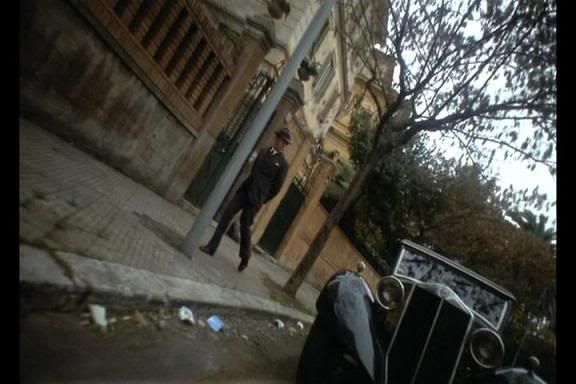
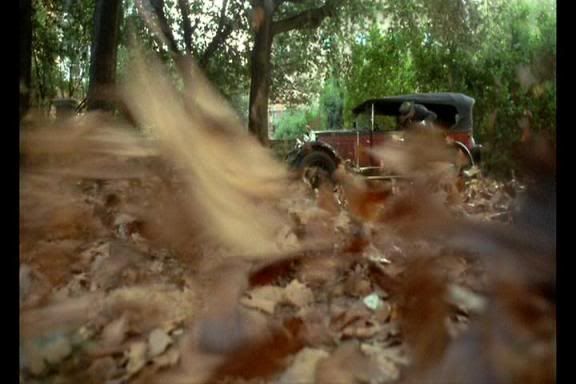
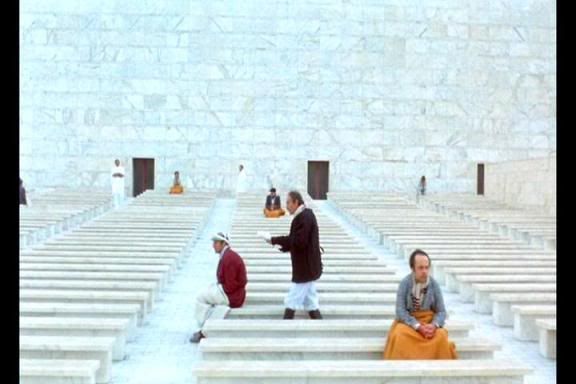
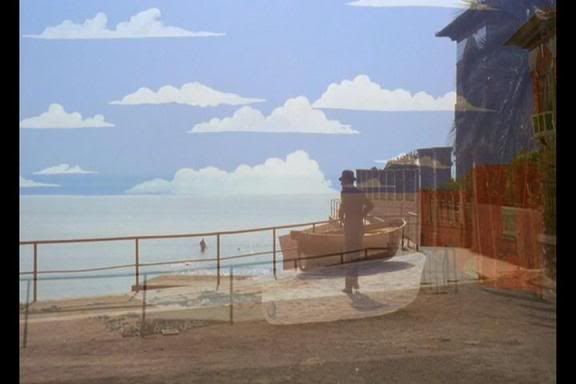
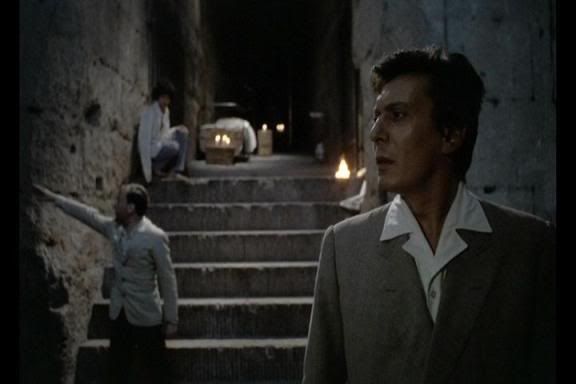
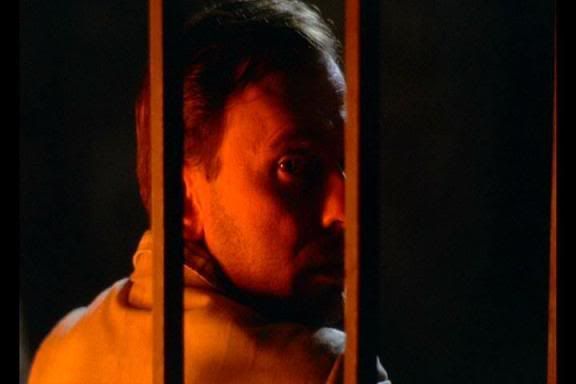
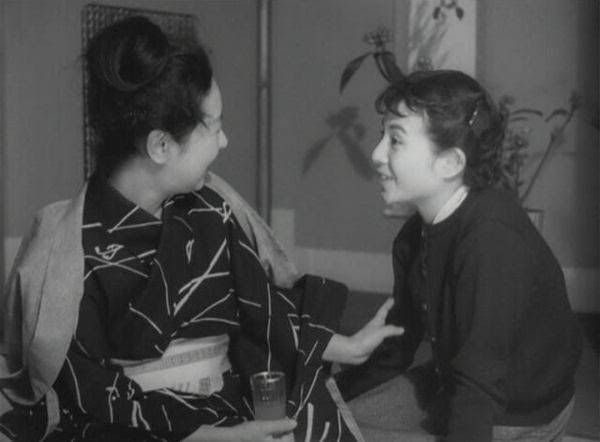
The contemporary setting of this film restricts the extent to which Mizoguchi can utilize the lyrical compositions that characterize his period pieces, but the film is nonetheless an aesthetically pleasing effort. Intriguingly, the film begins and ends with exactly the same high-angled establishing shot that opens Chikamatsu Monogatari (which would be Mizoguchi's next film), drawing attention to the circularity that's a recurrent idea within the director's filmography. Rumour concludes by criticizing Japan's failure to create more opportunities for females to escape their objectification, and thus the graphic match that's created by the film's last shot and Chikamatsu's first has the effect of underlining the shared mysoginism in society both past and present. It's a powerful conclusion, and one that makes The Woman in the Rumour essential viewing for any Mizoguchi enthusiast.
Thursday, 28 February 2008
The Woman in the Rumour (Mizoguchi, 1954)
The contemporary setting of this film restricts the extent to which Mizoguchi can utilize the lyrical compositions that characterize his period pieces, but the film is nonetheless an aesthetically pleasing effort. Intriguingly, the film begins and ends with exactly the same high-angled establishing shot that opens Chikamatsu Monogatari (which would be Mizoguchi's next film), drawing attention to the circularity that's a recurrent idea within the director's filmography. Rumour concludes by criticizing Japan's failure to create more opportunities for females to escape their objectification, and thus the graphic match that's created by the film's last shot and Chikamatsu's first has the effect of underlining the shared mysoginism in society both past and present. It's a powerful conclusion, and one that makes The Woman in the Rumour essential viewing for any Mizoguchi enthusiast.
Chikamatsu Monogatari (Mizoguchi, 1954)
(aka, The Crucified Lovers)
One of the bonus features of my (beautiful) Chikamatsu Monogatari DVD is a short discussion with Mizoguchi 'expert' Tony Rayns. It's an informative piece rather than an analytical one, and he claims that the film is lesser Mizoguchi, suggesting that the director wasn't entirely committed to the film - in part, due to the messy end to his professional (and personal?) relationship with favoured actress, Kinuyo Tanaka. His points aren't lost on the viewer, but although Chikamatsu isn't as supreme an artistic achievement as Sansho the Bailiff (one of the five greatest films ever made, for those who continue to live in ignorance) or even Ugetsu, it's nevertheless a fantastic demonstration of Mizoguchi's ability to elevate mediocre material simply with the sophistication of his craft.
It's not difficult to grasp why the director would be suited to this story. Thematically, Chikamatsu is typical Mizoguchi thanks to its concern with the oppression of females, the rigidity of social hierarchies, the hypocrisy of patriarchal conventions etc. etc. Unusually for Mizoguchi however, the narrative that gives birth to these ideas is only partially successful. The central romantic drama rests upon contrivances that require a wilful blind-eye on the audience's part, and its melodramatic nature is convoluted by the decision to expand the scope by interweaving underdeveloped subplots concerning the Master and Otama (a servant in love with Mohei, the male lead.) Chikamatsu's characters are further hindered by a horrid tendency to expose concerns that the narrative and/or Mizoguchi already makes clear - thus, after a premonitory crucifixion procession we're browbeaten with the Master's unnecessary articulation of the consequences of adultery, which is followed by a group of female servants questioning the misogynism inherent within the prevailing status system. It's startingly uncharacteristic of Mizoguchi to treat his audience with such disrespect, so one could be forgiven for wondering whether Rayns's arguments about the director's engagement with the production are legitimate.
Well, actually - no! One couldn't and shouldn't be forgiven for doubting the credentials of the greatest of all the Japanese auteurs (I'm calling it.) How easy it is to forget that this is the same director who ironed out the creases in Ugetsu's problematic screenplay with his unrestrained lyricism, thereby deeming it worthy of the 'masterpiece' moniker. Chikamatsu lacks the stylistic flourishes that makes Ugetsu (and also Sansho) such captivating viewing, but it does reveal a refinement in Mizoguchi's technique that's advantageous in terms of taming the melodrama. Above all, the film is an exercise in elegant restraint - each composition quietly ripens the subtext, achingly edging the audience closer towards its moving culmination. The overriding motivation behind much of Mizoguchi's framing is the issue of entrapment: Chikamatsu is overtly concerned with the concept of freedom, so it follows that for much of the film's first half (when the would-be lovers exist within the social order) the drama is interiorized into the cluttered spaces of the Master's house. Mizoguchi frequently uses this mise-en-scène as a 'device' to confine his characters even further within the already-tight frames, or to emphasize the distinctions between the public and private spheres of the household. In reality, this 'device' discloses the spuriousness of their confinement and the tragedy of self-imprisonment: all that binds these characters to their mores is a series of man-made constructs.
Chikamatsu Monogatari is not simply another sentimentalized paean to the resilience of the human spirit, however. Mizoguchi's use of repetition as a cinematic accessory fortifies the depths to which this legacy of entrapment has been ingrained into the society of this era: the film uses exactly the same establishing shot of a busy street during the opening in Kyoto (the home of the "crucified lovers", therefore associated with their confinement) as it does upon the lovers' escape to Osaka (which, briefly, becomes associated with their freedom.) 'Civilized' spaces refuse to grant the couple a reprieve, so only in the organic settings of countryside, lakes and forests can intimacy occur. Chikamatsu deals with a love that's stifled, so its rare emergence implores us to treasure its value all the more. Additionally, the drama that accompanies these moments of romance is nigh-on unbearable due to the consistency in Mizoguchi's subdued treatment of the story that surrounds it. Nevertheless, even in the elegiac beauty of the natural world, the pair are constantly forced into enclosure (a peasant's hut, a makeshift treehouse, Mohei's familial home) - the reality of the bloodthirsty world they inhabit catches up with them at each and every turn.
[SPOILERS HEREIN]
Tragically then, we come to the realization that the only avenue which presents an escape into the spiritual freedom that our protagonists' crave is that of death. Cruelty, greed and selfishness are the traits which taint the personalities of nearly all of the film's notable characters. Even those that we initially trust, such as Osan's mother, are eventually unmasked as merely another facet of this incriminating portrait. What these characters have in common is their conformity - they live by the status quo (although the ease with which Mohei, Osan and eventually the Master lose their place in their hierarchy reveals a wicked paradox between the rigidity of the order and the precariousness of the social status that it provides.) Chikamatsu doesn't suggest that obliterating the rulebook is the path to guaranteed enlightenment, but it does ask its audience to consider the restrictions of the world in which they exist and then presents an outlet for countering those limits: love. The beauty of this particular prescription is the surprise with which that love confronts its recipients, privileging them - however briefly and inadvertently - with a taste for living, as voiced by Osan herself after an aborted suicide attempt. It's this that lends Chikamatsu's finale its poignant intricacy. Mizoguchi's repetitional device resurfaces here, with a second crucifixion procession that augments the cyclical nature of his filmic world. The sequence is harrowing, explicitly recalling its predecessor and provoking a replacement of the first procession's anonymity with sorrow as we're forced to comprehend the fact that our "crucified lovers" are not the only ones. The gravity of this implication is contrasted with the serenity of the lovers' faces - both are calm, at peace. For the first time in their lives, they are genuinely free. And yet, the deplorable cost of this freedom is not lost on Mizoguchi, who leaves it up to an innocent bystander to articulate the express the bitter irony of the situation: "It's hard to imagine that they're on their way to die." After the experience of Chikamatsu Monogatari, one realizes that no, it's not hard at all - it's devastating.
It's not difficult to grasp why the director would be suited to this story. Thematically, Chikamatsu is typical Mizoguchi thanks to its concern with the oppression of females, the rigidity of social hierarchies, the hypocrisy of patriarchal conventions etc. etc. Unusually for Mizoguchi however, the narrative that gives birth to these ideas is only partially successful. The central romantic drama rests upon contrivances that require a wilful blind-eye on the audience's part, and its melodramatic nature is convoluted by the decision to expand the scope by interweaving underdeveloped subplots concerning the Master and Otama (a servant in love with Mohei, the male lead.) Chikamatsu's characters are further hindered by a horrid tendency to expose concerns that the narrative and/or Mizoguchi already makes clear - thus, after a premonitory crucifixion procession we're browbeaten with the Master's unnecessary articulation of the consequences of adultery, which is followed by a group of female servants questioning the misogynism inherent within the prevailing status system. It's startingly uncharacteristic of Mizoguchi to treat his audience with such disrespect, so one could be forgiven for wondering whether Rayns's arguments about the director's engagement with the production are legitimate.
Well, actually - no! One couldn't and shouldn't be forgiven for doubting the credentials of the greatest of all the Japanese auteurs (I'm calling it.) How easy it is to forget that this is the same director who ironed out the creases in Ugetsu's problematic screenplay with his unrestrained lyricism, thereby deeming it worthy of the 'masterpiece' moniker. Chikamatsu lacks the stylistic flourishes that makes Ugetsu (and also Sansho) such captivating viewing, but it does reveal a refinement in Mizoguchi's technique that's advantageous in terms of taming the melodrama. Above all, the film is an exercise in elegant restraint - each composition quietly ripens the subtext, achingly edging the audience closer towards its moving culmination. The overriding motivation behind much of Mizoguchi's framing is the issue of entrapment: Chikamatsu is overtly concerned with the concept of freedom, so it follows that for much of the film's first half (when the would-be lovers exist within the social order) the drama is interiorized into the cluttered spaces of the Master's house. Mizoguchi frequently uses this mise-en-scène as a 'device' to confine his characters even further within the already-tight frames, or to emphasize the distinctions between the public and private spheres of the household. In reality, this 'device' discloses the spuriousness of their confinement and the tragedy of self-imprisonment: all that binds these characters to their mores is a series of man-made constructs.
Chikamatsu Monogatari is not simply another sentimentalized paean to the resilience of the human spirit, however. Mizoguchi's use of repetition as a cinematic accessory fortifies the depths to which this legacy of entrapment has been ingrained into the society of this era: the film uses exactly the same establishing shot of a busy street during the opening in Kyoto (the home of the "crucified lovers", therefore associated with their confinement) as it does upon the lovers' escape to Osaka (which, briefly, becomes associated with their freedom.) 'Civilized' spaces refuse to grant the couple a reprieve, so only in the organic settings of countryside, lakes and forests can intimacy occur. Chikamatsu deals with a love that's stifled, so its rare emergence implores us to treasure its value all the more. Additionally, the drama that accompanies these moments of romance is nigh-on unbearable due to the consistency in Mizoguchi's subdued treatment of the story that surrounds it. Nevertheless, even in the elegiac beauty of the natural world, the pair are constantly forced into enclosure (a peasant's hut, a makeshift treehouse, Mohei's familial home) - the reality of the bloodthirsty world they inhabit catches up with them at each and every turn.
[SPOILERS HEREIN]
Tragically then, we come to the realization that the only avenue which presents an escape into the spiritual freedom that our protagonists' crave is that of death. Cruelty, greed and selfishness are the traits which taint the personalities of nearly all of the film's notable characters. Even those that we initially trust, such as Osan's mother, are eventually unmasked as merely another facet of this incriminating portrait. What these characters have in common is their conformity - they live by the status quo (although the ease with which Mohei, Osan and eventually the Master lose their place in their hierarchy reveals a wicked paradox between the rigidity of the order and the precariousness of the social status that it provides.) Chikamatsu doesn't suggest that obliterating the rulebook is the path to guaranteed enlightenment, but it does ask its audience to consider the restrictions of the world in which they exist and then presents an outlet for countering those limits: love. The beauty of this particular prescription is the surprise with which that love confronts its recipients, privileging them - however briefly and inadvertently - with a taste for living, as voiced by Osan herself after an aborted suicide attempt. It's this that lends Chikamatsu's finale its poignant intricacy. Mizoguchi's repetitional device resurfaces here, with a second crucifixion procession that augments the cyclical nature of his filmic world. The sequence is harrowing, explicitly recalling its predecessor and provoking a replacement of the first procession's anonymity with sorrow as we're forced to comprehend the fact that our "crucified lovers" are not the only ones. The gravity of this implication is contrasted with the serenity of the lovers' faces - both are calm, at peace. For the first time in their lives, they are genuinely free. And yet, the deplorable cost of this freedom is not lost on Mizoguchi, who leaves it up to an innocent bystander to articulate the express the bitter irony of the situation: "It's hard to imagine that they're on their way to die." After the experience of Chikamatsu Monogatari, one realizes that no, it's not hard at all - it's devastating.
Tuesday, 26 February 2008
Americanized 2007 Ballot
Going with US release dates here. I'll post my actual 2007 ballot later in the year when I get a chance to watch Alexandra, The Edge of Heaven, The Man from London etc. I've now seen of the critically-beloved US releases from the awards season (Persépolis and Ratatouille are sadly exceptions) so without further ado, I present the Americanized 2007 Spiceys (better than the Oscars):
TOP TEN FILMS
BEST DIRECTOR
BEST ACTOR
BEST SUPPORTING ACTOR
BEST SUPPORTING ACTRESS
BEST ENSEMBLE
BEST ORIGINAL SCREENPLAY
BEST ADAPTED SCREENPLAY
BEST CINEMATOGRAPHY
TECHNICAL GRAND PRIZE
BEST ORIGINAL SCORE
- Syndromes and a Century (Weerasethakul)
- 4 Months, 3 Weeks and 2 Days (Mungiu)
- No Country for Old Men (Coen Bros.)
- The Assassination of Jesse James by the Coward Robert Ford (Dominik)
- Control (Corbijn)
- Private Fears in Public Places (Resnais)
- Bamako (Sissako)
- Golden Door (Crialese)
- Eastern Promises (Cronenberg)
- The Diving Bell and the Butterfly (Schnabel)
Also: Black Book (Verhoeven), Lust, Caution (Lee), I'm Not There (Haynes), Lady Chatterley (Ferran), This Is England (Meadows), Margot at the Wedding (Baumbach)
- Apichatpong Weerasethakul, Syndromes and a Century
- Joel & Ethan Coen, No Country for Old Men
- Cristian Mungiu, 4 Months, 3 Weeks and 2 Days
- Alain Resnais, Private Fears in Public Places
- Anton Corbijn, Control
- Casey Affleck, The Assassination of Jesse James by the Coward Robert Ford
- Sam Riley, Control
- Viggo Mortensen, Eastern Promises
- Daniel Day-Lewis, There Will Be Blood
- Brad Pitt, The Assassination of Jesse James by the Coward Robert Ford
BEST ACTRESS
- Anamaria Marinca, 4 Months, 3 Weeks and 2 Days
- Marion Cotillard, La Vie en Rose
- Nicole Kidman, Margot at the Wedding
- Marina Hands, Lady Chatterley
- Carice van Houten, Black Book
- Javier Bardem, No Country for Old Men
- Max von Sydow, The Diving Bell and the Butterfly
- Tommy Lee Jones, No Country for Old Men
- Vlad Ivanov, 4 Months, 3 Weeks and 2 Days
- André Dussollier, Private Fears in Public Places
- Samantha Morton, Control
- Jennifer Jason Leigh, Margot at the Wedding
- Laura Morante, Private Fears in Public Places
- Vanessa Redgrave, Atonement
- Charlotte Gainsbourg, I'm Not There
- Private Fears in Public Places
(Laura Morante, André Dussollier, Sabine Azèma, Pierre Arditi, Lambert Wilson, Isabelle Carré, Claude Rich) - The Diving Bell and the Butterfly
(Mathieu Amalric, Max von Sydow, Emmanuelle Seigner, Marie-Josée Croze, Anne Consigny, Marina Hands, Jean-Pierre Cassel, Patrick Chesnais, Isaach De Bankolé) - No Country for Old Men
(Javier Bardem, Tommy Lee Jones, Josh Brolin, Kelly MacDonald, Woody Harrelson) - Eastern Promises
(Viggo Mortensen, Naomi Watts, Armin Mueller-Stahl, Vincent Cassel, Jerzy Skolimowski, Sinéad Cusack) - I'm Not There
(Charlotte Gainsbourg, Marcus Carl Franklin, Cate Blanchett, Heath Ledger, Richard Gere, Ben Whishaw, Julianne Moore)
- Cristian Mungiu, 4 Months, 3 Weeks and 2 Days
- Noah Baumbach, Margot at the Wedding
- Aberrahmane Sissako, Bamako
- Todd Haynes & Oren Moverman, I'm Not There
- Shane Meadows, This Is England
- Joel & Ethan Coen, No Country for Old Men
- Roger Bohbot & Pascale Ferran, Lady Chatterley
- Jean-Michel Ribes, Private Fears in Public Places
- Ronald Harwood, The Diving Bell and the Butterfly
- Matt Greenhalgh, Control
- Roger Deakins, The Assassination of Jesse James by the Coward Robert Ford
- Janusz Kaminski, The Diving Bell and the Butterfly
- Agnès Godard, Golden Door
- Martin Ruhe, Control
- Edward Lachman, I'm Not There
- I'm Not There
- Lust, Caution
- Sweeney Todd: The Demon Barber of Fleet Street
- There Will Be Blood
- Black Book
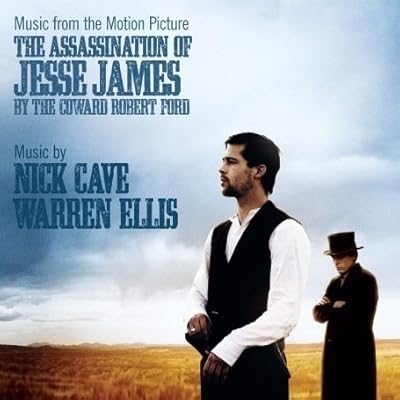
- Nick Cave & Warren Ellis, The Assassination of Jesse James by the Coward Robert Ford
- Alexandre Desplat, Lust, Caution
- Jonny Greenwood, There Will Be Blood
- Dario Marianelli, Atonement
- Howard Shore, Eastern Promises
Lancelot du lac (Bresson, 1974)
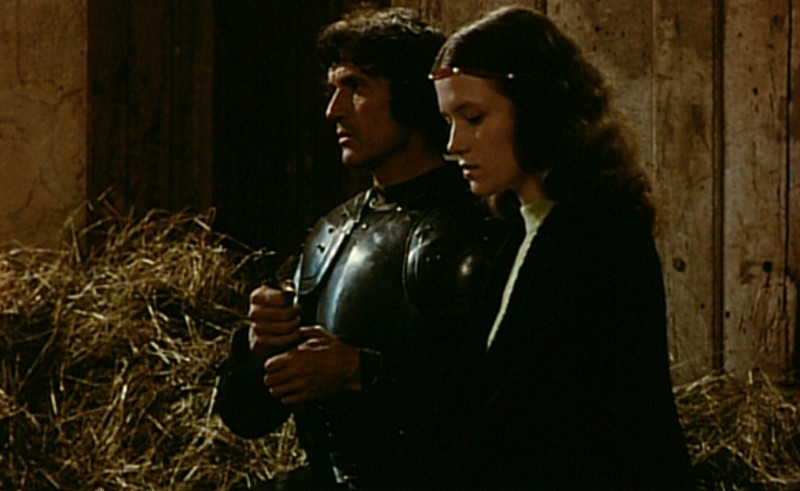
Unsurprisingly, the most striking element of Lancelot du lac is its visual style. Bresson's subdued, metallic palette dominates every frame to the point where the presence of colour is rendered almost a novelty. His unique coloration thus serves as an apt metaphor for the lives of his disillusioned knights, whose failed quest for the Holy Grail has degraded them into a group of factioning marauders so consumed by their individual desires that they've lost a sense of their own humanity. It's a sign of the director's neverending genius when one realises that the film's most glaring use of a bright schema comes with the unrealistic reds spilt during bloodshed (which begins in the very opening sequence) - its artificiality reflecting the characters' own, and tellingly highlighting the fallibility of their armour. Lancelot du lac from the outset then, reveals itself as a demythologizing of Arthurian legend that deprives its characters of their heroism and subsequently frees them from a filmic convention that dictates romanticism is the only way to depict their tale.
The culmination of this unique approach is a jousting tournament that functions as the film's most action-filled sequence, with a Bressonian spin on events of course. He chooses to film most of these jousts from the neck down, focusing primarily on movement and reaction (from the bystanders and the injured.) The editing of the sequence draws attention to the fragmented nature of his shot-making, which denies its audience the privilege of knowing character identities. The issue of identity is further compounded by the aforementioned armour - a costume that's seemingly used by its owners as a status symbol, judging by the rarity of any moments without the disguise. Do these characters even know themselves, or has the legend of the Round Table infiltrated their own mindsets to the point where they define themselves by it and it alone? In the titular character's case, the armour is symbolic of the barrier that stands between him and Guinevere. Only with its removal is he able to allow himself to love, but the expectations of his peers prevents such hope.
Personality is an alien concept in the world that Bresson has created for us. His much-remarked use of actors as 'models' has accordingly never been so appropriate. And yet, despite the film's overt formalism, Lancelot is far from being devoid of emotion. Although the actors lack in this department, their deficits are the audience's gain for the tragedy of the film is all the more vital as a result of its characters' helplessness in the face of the drama. As is customary with Bresson, there is an intense spiritual vein that permeates the film, with the search for the Holy Grail symbolizing a search for God - but as Guinevere notes, "God isn't a trophy to take home." The emptiness performed by the models is more than a gimmick on Bresson's part, it's a filmic articulation of the characters' desolation, arising from their incapacity to realize this statement. Their religosity has been compromised by attempts to subvert their Christianity into a weapon of destruction. Thus, there's a sobering sense of irony when they pose the question: "Why has God forsaken us?", failing to realize their own complicity in this dilemma. Bresson deconstructs these larger-than-life characters down to their fundamental cores, substituting their valiance for ethereal ignorance, before reconstructing them as pawns in a critical study of humankind. When the film concludes with an image of the damning resolution to these conflicts - [Spoiler:] a cluttered heap of broken bodies on the forest floor - it's as if Bresson is daring us to contemplate how this all occurred. The answer, we can infer, may have something to do with our inability to understand the myths that we revere.
The Conformist (Bertolucci, 1970)
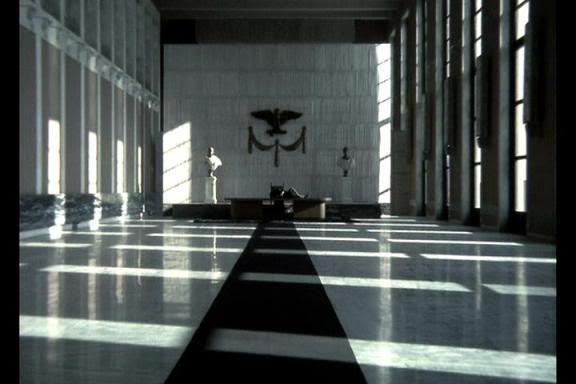
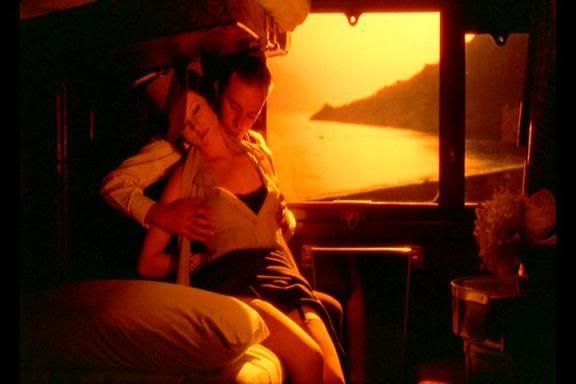
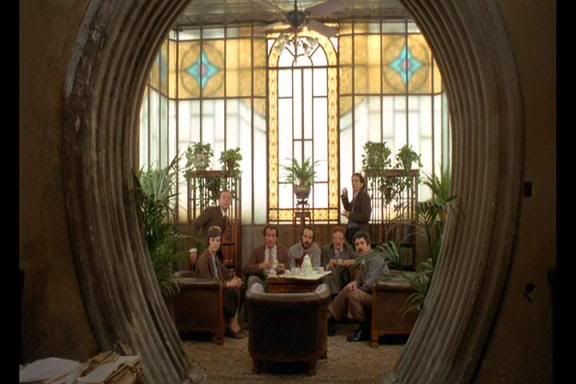
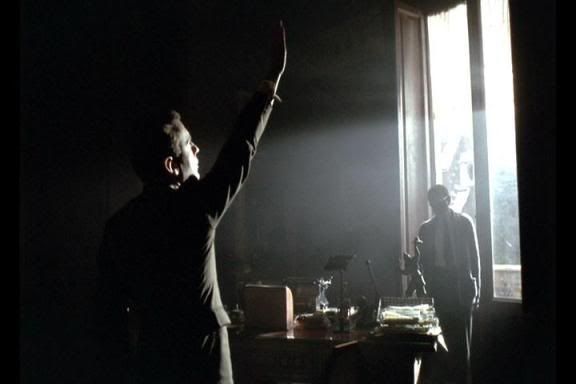
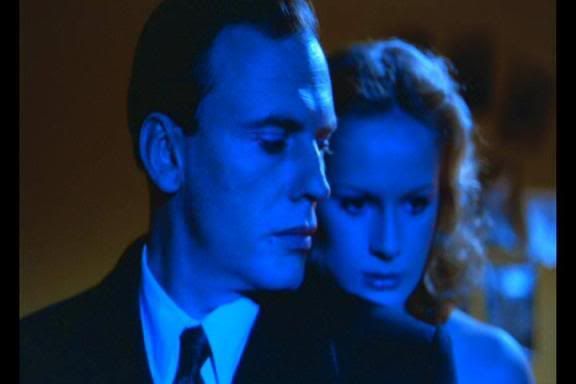
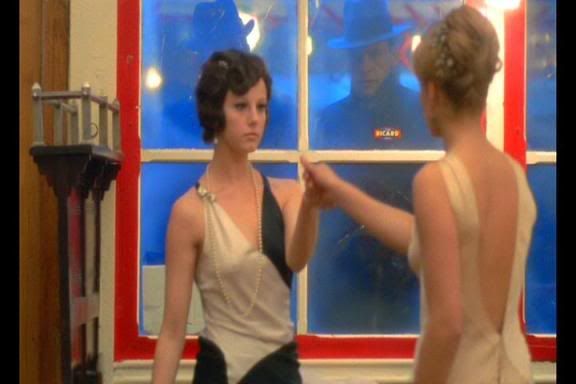
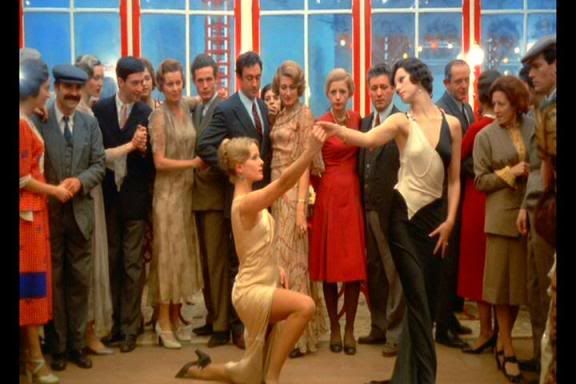
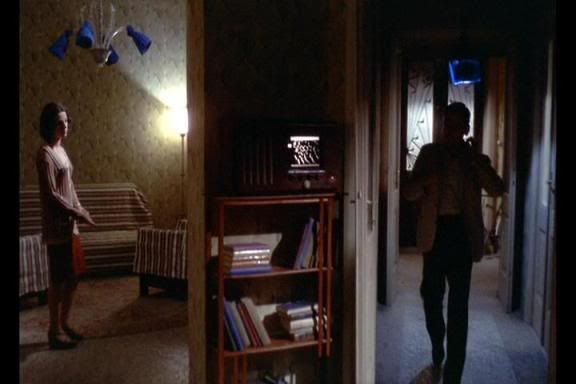
Has the relationship between narrative and image ever been as consistently potent as it is in Bertolucci's The Conformist? An exuberantly sensual exercise in cinematic style, the film's every frame threatens to burst as a result of its creativity: the compositions, the plays on light and colour, the elegant gliding of the camera... all the visual elements of film coalesce to produce a work of art that's pictorially astonishing. And Bertolucci's style isn't merely hollow posturing, it IS his substance. Thus, the sequences of the film that take place in Italy are characterized by their acute angles, imposing interiors and sharp distinctions between light and shadow, all in order to underscore the restrictive claustrophobia of fascism. It follows that the Parisian segments are notable for their warmer hues, more extensive infiltration of light and external night sequences that are draped in a luminous shade of blue - a shade that seems curiously befitting for its protgaonist's internal concerns. In spite of these vague generalizations, the power behind Bertolucci's shotmaking derives from its lack of a consistent agenda - he's daring enough to stylize for the scene at hand, so the [Spoiler:] higher cutting rate that accompanies the Professor's murder (shot from a number of angles) is followed by the rapid movements of a handheld camera during Anna's death scene.
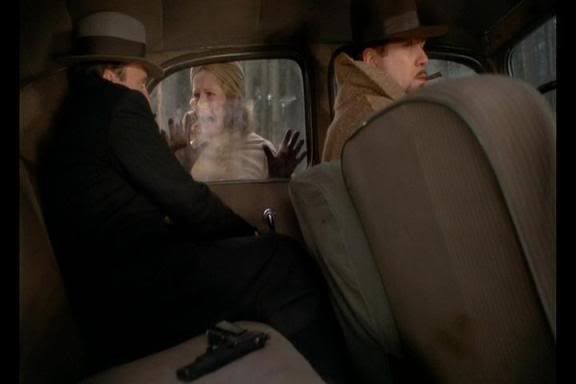
A non-linear, sequential narrative complements the director's stylistic audacity. Bertolucci uses a car journey that occurs prior to the aforementioned death scenes to reinforce the centrality of the film's primary concern - that being the extent to which lead character Marcello is willing to whore himself in order to become the conformist of the title. With fascism forming the film's socio-political backdrop (and dominating so much of the mise-en-scène) the implications of his attempts to extinguish the less desirable elements of his personality aren't lost on the viewer. Bertolucci's intercutting between past and present invites us to make a further analogy: namely, the link between sexual repression and political extremism. It's this invitation that's perhaps the film's only flaw, for it's both predictable and underdeveloped. Nevertheless, the quiet stoicism of Trintignant's performance thwarts this criticism to an extent, and the remainder isn't enough of a hindrance to even make a dent in the might of Bertolucci's cinematic construct. The film's poignant finale, which sets loose the secrets that our conformist was attempting to subjugate against the background of Italian Fascism's decline, is a solemn reminder of the effects of entrapping the free spirit.
The Conformist is so many things: a treatise on Italian (European?) history, an invigorating thriller, a fascinating character study... but really, the star of this show is the incomparable visual style (thank you, Vittorio Storaro you God.) So there's no other way to conclude (nor is there a more convincing argument for watching this film) than to allow some glimpses of Bertolucci's electrifying vision:


A non-linear, sequential narrative complements the director's stylistic audacity. Bertolucci uses a car journey that occurs prior to the aforementioned death scenes to reinforce the centrality of the film's primary concern - that being the extent to which lead character Marcello is willing to whore himself in order to become the conformist of the title. With fascism forming the film's socio-political backdrop (and dominating so much of the mise-en-scène) the implications of his attempts to extinguish the less desirable elements of his personality aren't lost on the viewer. Bertolucci's intercutting between past and present invites us to make a further analogy: namely, the link between sexual repression and political extremism. It's this invitation that's perhaps the film's only flaw, for it's both predictable and underdeveloped. Nevertheless, the quiet stoicism of Trintignant's performance thwarts this criticism to an extent, and the remainder isn't enough of a hindrance to even make a dent in the might of Bertolucci's cinematic construct. The film's poignant finale, which sets loose the secrets that our conformist was attempting to subjugate against the background of Italian Fascism's decline, is a solemn reminder of the effects of entrapping the free spirit.
The Conformist is so many things: a treatise on Italian (European?) history, an invigorating thriller, a fascinating character study... but really, the star of this show is the incomparable visual style (thank you, Vittorio Storaro you God.) So there's no other way to conclude (nor is there a more convincing argument for watching this film) than to allow some glimpses of Bertolucci's electrifying vision:
Saturday, 23 February 2008
Gun Crazy (Lewis, 1949)
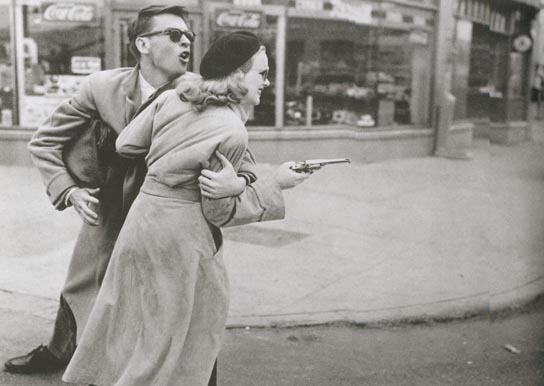
Gun Crazy presents the audience with a story that we've grown accustomed to over the years: "love on the run", aka Bonnie and Clyde pre-Beatty and Dunaway. Lewis & co. add a peculiar spin on the subject matter however which maintains our enjoyment on a base level whilst confronting us with stark questions about gender, sexuality and violence. A cinematic prologue establishes the perverse sexual undercurrents that will pulsate throughout the film: we witness the fervor of the young Bart's thirst for guns, and we suggestively learn how it's "something else about the guns that gets him, not the killing." In spite of the phallic connotations that repeatedly demand consideration however, the film makes its case less for repressed homosexuality than it does for an emasculated masculinity implicitly motivated by the post-war context (the lack of a father figure established in the prologue no doubt plays into this.) The firmness of Bart's devotion to guns makes his inability to use them in their traditional filmic roles (as a means to kill) all the more striking, and a compelling contrast is provided by the character of Annie who is in essence a walking, talking and decidedly attractive human firearm. It makes perfect sense for Bart to fall in love with this most curious of femme fatales - a woman who exploits her femininity in order to disguise her sociopathic tendencies: her adoption of the 'masculine' traits lacking in Bart (her superior wiles, her domineering personality, her ability to kill) alludes to an overlap in gender roles, which makes their love a near-necessity. They need one another because of what they lack as individuals and because together they can counter those deficiencies.
The motivations of Annie's character are dubious for much of the film, and even after several robberies with Bart it's possible to doubt the sincerity of her love. Lewis puts paid to such notions in an extraordinary sequence following the couple's final robbery, however: the plan is for them to depart in separate vehicles and meet three months later after the dust has settled - and yet, in a stunning avowal of their mutual dependence, the camera cuts between each as they abruptly u-turn at the same time and reunite in the middle of the road (tellingly, it's Bart who leaves his car to get into Annie's.) This is l'amour fou taken to its dizzying extreme, augmented by a delirious substitution of foreplay with gunplay - thereby blurring the lines between eroticism and violence. To depict such bold forms of sexuality would be noteworthy in itself, but Lewis provides more by extracting every ounce of pulp from his doomed lovers' tango with fate: their tantalising first encounter is a brilliant exercise in marrying overt (Bart's attraction, Annie's gun-wielding seductress, the firing challenge) with covert (it doesn't take a genius to figure out the innuendo in this sequence.) Annie's employer/former lover describes the budding young couple as "wild animals", and he isn't far wrong for Annie's primal feline pinpoints the animalistic urges in Bart's passivity and exploits them.
To discuss this film without addressing the issue of guns would be foolish, but I'll confess that I'm not entirely well-versed in America's gun laws. Certainly, their accessibility and availability is of cause for concern here - particularly in the early segments featuring the young Bart. The B-movie sensationalist in Lewis glorifies and fetishizes the issue to a certain extent with the character of Annie, but to his credit the moral centre of the film is to be found within Bart and he's a solid reflection of our desire for thrills but also our disdain for harming others. Both Annie and his boyhood friends encourage him to kill at certain points, and its his resistance to them that the film venerates. Appropriately then, when he succumbs to murder at film's end the narrative compels him to meet his own death, in spite of the perhaps-justifiable reasoning behind his decision.
At the risk of negating all my rambling, I need to conclude by emphasizing just how tremendously enjoyable this film really is. The film's bizarre marriage of sex and violence is the type of concoction that will no doubt reward endless viewings, and on its basest level its an electrifying chase drama that swathes a familiar narrative with an irresistible sense of urgency. And then there's Peggy Cummins. Unheard of to contemporary audiences, but worthy of immortalization for this one turn alone. She's meant to be playing British (she even claims to be from my hometown!), although the accent is all over the place. What does it matter though, when one's confronted with a presence like this? Her performance is equal parts delicious and ferocious, and her success at internalizing Annie's insecurities renders all other noir females dull and lifeless by comparison. And finally, I return to Lewis whose sense of style cannot be commended enough. How could such an infinitely talented director have become so marginalized by Hollywood? Gun Crazy is perhaps above all a reminder of the painful restrictions imposed by the studio system, but on a more positive note, it's as fine a testament to the rewards of working outside of that mainstream as I can think of.
Monday, 21 January 2008
Oscar Predix
Unfortunately, it's that time of the year again. Unfortunately, I always follow the deplorable Oscar race. So unfortunately, I'm gonna have to post these predix. This year's Academy Award nominees are guaranteed to look a little something like this:
BEST PICTURE
* The Diving Bell and the Butterfly
* Into the Wild
* Juno
* No Country for Old Men
* There Will Be Blood
Alt: Michael Clayton
BEST DIRECTOR
* Paul Thomas Anderson, There Will Be Blood
* Joel & Ethan Coen, No Country for Old Men
* Tony Gilroy, Michael Clayton
* Sean Penn, Into the Wild
* Julian Schnabel, The Diving Bell and the Butterfly
Alt: Tim Burton, Sweeney Todd: The Demon Barber of Fleet Street
BEST ACTOR
* George Clooney, Michael Clayton
* Daniel Day-Lewis, There Will Be Blood
* Ryan Gosling, Lars and the Real Girl
* Emile Hirsch, Into the Wild
* Viggo Mortensen, Eastern Promises
Alt: Johnny Depp, Sweeney Todd: The Demon Barber of Fleet Street
BEST ACTRESS
* Cate Blanchett, Elizabeth: The Golden Age
* Julie Christie, Away from Her
* Marion Cotillard, La Vie en Rose
* Angelina Jolie, A Mighty Heart
* Ellen Page, Juno
Alt: Amy Adams, Enchanted
BEST SUPPORTING ACTOR
* Casey Affleck, The Assassination of Jesse James by the Coward Robert Ford
* Javier Bardem, No Country for Old Men
* Hal Holbrook, Into the Wild
* Tommy Lee Jones, No Country for Old Men
* Tom Wilkinson, Michael Clayton
Alt: Philip Seymour Hoffman, Charlie Wilson's War
BEST SUPPORTING ACTRESS
* Cate Blanchett, I'm Not There
* Catherine Keener, Into the Wild
* Kelly MacDonald, No Country for Old Men
* Amy Ryan, Gone Baby Gone
* Tilda Swinton, Michael Clayton
Alt: Saoirse Ronan, Atonement
BEST ORIGINAL SCREENPLAY
* Brad Bird, Jim Capobiano & Jan Pinkava, Ratatouille
* Diablo Cody, Juno
* Tony Gilroy, Michael Clayton
* Tamara Jenkins, The Savages
* Nancy Oliver, Lars and the Real Girl
Alt: Judd Apatow, Knocked Up
BEST ADAPTED SCREENPLAY
* Paul Thomas Anderson, There Will Be Blood
* Joel & Ethan Coen, No Country for Old Men
* Christopher Hampton, Atonement
* Ronald Harwood, The Diving Bell and the Butterfly
* Sean Penn, Into the Wild
Alt: Aaron Sorkin, Charlie Wilson's War
BEST CINEMATOGRAPHY
* Roger Deakins, The Assassination of Jesse James by the Coward Robert Ford
* Roger Deakins, No Country for Old Men
* Robert Elswit, There Will Be Blood
* Janusz Kaminski, The Diving Bell and the Butterfly
* Seamus McGarvey, Atonement
Alt: Eric Gautier, Into the Wild
BEST EDITING
* The Bourne Ultimatum -- Christopher Rouse
* Into the Wild -- Jay Cassidy
* Michael Clayton -- John Gilroy
* No Country for Old Men -- Roderick Jaynes
* There Will Be Blood -- Dylan Tichenor
Alt: American Gangster -- Pietro Scalia
BEST SCORE
* Marco Beltrami, 3:10 to Yuma
* Alexandre Desplat, Lust, Caution
* Michael Giacchino, Ratatouille
* Alberto Iglesias, The Kite Runner
* Dario Marianelli, Atonement
Alt: Clint Eastwood, Grace Is Gone
BEST SOUND
* 300
* The Bourne Ultimatum
* No Country for Old Men
* Sweeney Todd: The Demon Barber of Fleet Street
* Transformers
Alt: There Will Be Blood
BEST SOUND EDITING
* 300
* Beowulf
* The Bourne Ultimatum
* Ratatouille
* Transformers
Alt: No Country for Old Men
BEST VISUAL EFFECTS
* 300
* Transformers
* Pirates of the Caribbean: At World's End
Alt: I Am Legend
BEST ART DIRECTION
* Atonement -- Sarah Greenwood & Katie Spencer
* Elizabeth: The Golden Age -- Guy Hendrix Dyas & Richard Roberts
* Harry Potter and the Order of the Phoenix -- Stuart Craig & Stephanie McMillan
* Sweeney Todd: The Demon Barber of Fleet Street -- Dante Ferretti & Francesca Lo Schiavo
* There Will Be Blood -- Jack Fisk & Jim Erickson
Alt: The Golden Compass -- Dennis Gassner & Anna Pinnock
BEST COSTUME DESIGN
* The Assassination of Jesse James by the Coward Robert Ford -- Patricia Norris
* Atonement -- Jacqueline Durran
* Elizabeth: The Golden Age -- Alexandra Byrne
* Sweeney Todd: The Demon Barber of Fleet Street -- Colleen Atwood
* La Vie en Rose -- Marit Allen
Alt: Hairspray -- Rita Ryack
BEST MAKEUP
* Pirates of the Caribbean: At World's End
* Sweeney Todd: The Demon Barber of Fleet Street
* La Vie en Rose
Alt: 300
BEST ORIGINAL SONG
* "Come So Far (Got So Far to Go)" from Hairspray
* "Falling Slowly" from Once
* "Grace Is Gone" from Grace Is Gone
* "Guaranteed" from Into the Wild
* "That's How You Know" from Enchanted
Alt: "Do You Feel Me" from American Gangster
BEST FOREIGN-LANGUAGE FILM
* 12 (Russia)
* The Counterfeiters (Austria)
* Katyn (Poland)
* The Trap (Serbia)
* The Year My Parents Went On Vacation (Brazil)
Alt: Beaufort (Israel)
BEST ANIMATED FEATURE
* Persepolis
* Ratatouille
* The Simpsons Movie
Alt: Bee Movie
BEST DOCUMENTARY FEATURE
* Body of War
* Lake of Fire
* No End in Sight
* Sicko
* Taxi to the Dark Side
Alt: Nanking
* The Diving Bell and the Butterfly
* Into the Wild
* Juno
* No Country for Old Men
* There Will Be Blood
Alt: Michael Clayton
BEST DIRECTOR
* Paul Thomas Anderson, There Will Be Blood
* Joel & Ethan Coen, No Country for Old Men
* Tony Gilroy, Michael Clayton
* Sean Penn, Into the Wild
* Julian Schnabel, The Diving Bell and the Butterfly
Alt: Tim Burton, Sweeney Todd: The Demon Barber of Fleet Street
BEST ACTOR
* George Clooney, Michael Clayton
* Daniel Day-Lewis, There Will Be Blood
* Ryan Gosling, Lars and the Real Girl
* Emile Hirsch, Into the Wild
* Viggo Mortensen, Eastern Promises
Alt: Johnny Depp, Sweeney Todd: The Demon Barber of Fleet Street
BEST ACTRESS
* Cate Blanchett, Elizabeth: The Golden Age
* Julie Christie, Away from Her
* Marion Cotillard, La Vie en Rose
* Angelina Jolie, A Mighty Heart
* Ellen Page, Juno
Alt: Amy Adams, Enchanted
BEST SUPPORTING ACTOR
* Casey Affleck, The Assassination of Jesse James by the Coward Robert Ford
* Javier Bardem, No Country for Old Men
* Hal Holbrook, Into the Wild
* Tommy Lee Jones, No Country for Old Men
* Tom Wilkinson, Michael Clayton
Alt: Philip Seymour Hoffman, Charlie Wilson's War
BEST SUPPORTING ACTRESS
* Cate Blanchett, I'm Not There
* Catherine Keener, Into the Wild
* Kelly MacDonald, No Country for Old Men
* Amy Ryan, Gone Baby Gone
* Tilda Swinton, Michael Clayton
Alt: Saoirse Ronan, Atonement
BEST ORIGINAL SCREENPLAY
* Brad Bird, Jim Capobiano & Jan Pinkava, Ratatouille
* Diablo Cody, Juno
* Tony Gilroy, Michael Clayton
* Tamara Jenkins, The Savages
* Nancy Oliver, Lars and the Real Girl
Alt: Judd Apatow, Knocked Up
BEST ADAPTED SCREENPLAY
* Paul Thomas Anderson, There Will Be Blood
* Joel & Ethan Coen, No Country for Old Men
* Christopher Hampton, Atonement
* Ronald Harwood, The Diving Bell and the Butterfly
* Sean Penn, Into the Wild
Alt: Aaron Sorkin, Charlie Wilson's War
BEST CINEMATOGRAPHY
* Roger Deakins, The Assassination of Jesse James by the Coward Robert Ford
* Roger Deakins, No Country for Old Men
* Robert Elswit, There Will Be Blood
* Janusz Kaminski, The Diving Bell and the Butterfly
* Seamus McGarvey, Atonement
Alt: Eric Gautier, Into the Wild
BEST EDITING
* The Bourne Ultimatum -- Christopher Rouse
* Into the Wild -- Jay Cassidy
* Michael Clayton -- John Gilroy
* No Country for Old Men -- Roderick Jaynes
* There Will Be Blood -- Dylan Tichenor
Alt: American Gangster -- Pietro Scalia
BEST SCORE
* Marco Beltrami, 3:10 to Yuma
* Alexandre Desplat, Lust, Caution
* Michael Giacchino, Ratatouille
* Alberto Iglesias, The Kite Runner
* Dario Marianelli, Atonement
Alt: Clint Eastwood, Grace Is Gone
BEST SOUND
* 300
* The Bourne Ultimatum
* No Country for Old Men
* Sweeney Todd: The Demon Barber of Fleet Street
* Transformers
Alt: There Will Be Blood
BEST SOUND EDITING
* 300
* Beowulf
* The Bourne Ultimatum
* Ratatouille
* Transformers
Alt: No Country for Old Men
BEST VISUAL EFFECTS
* 300
* Transformers
* Pirates of the Caribbean: At World's End
Alt: I Am Legend
BEST ART DIRECTION
* Atonement -- Sarah Greenwood & Katie Spencer
* Elizabeth: The Golden Age -- Guy Hendrix Dyas & Richard Roberts
* Harry Potter and the Order of the Phoenix -- Stuart Craig & Stephanie McMillan
* Sweeney Todd: The Demon Barber of Fleet Street -- Dante Ferretti & Francesca Lo Schiavo
* There Will Be Blood -- Jack Fisk & Jim Erickson
Alt: The Golden Compass -- Dennis Gassner & Anna Pinnock
BEST COSTUME DESIGN
* The Assassination of Jesse James by the Coward Robert Ford -- Patricia Norris
* Atonement -- Jacqueline Durran
* Elizabeth: The Golden Age -- Alexandra Byrne
* Sweeney Todd: The Demon Barber of Fleet Street -- Colleen Atwood
* La Vie en Rose -- Marit Allen
Alt: Hairspray -- Rita Ryack
BEST MAKEUP
* Pirates of the Caribbean: At World's End
* Sweeney Todd: The Demon Barber of Fleet Street
* La Vie en Rose
Alt: 300
BEST ORIGINAL SONG
* "Come So Far (Got So Far to Go)" from Hairspray
* "Falling Slowly" from Once
* "Grace Is Gone" from Grace Is Gone
* "Guaranteed" from Into the Wild
* "That's How You Know" from Enchanted
Alt: "Do You Feel Me" from American Gangster
BEST FOREIGN-LANGUAGE FILM
* 12 (Russia)
* The Counterfeiters (Austria)
* Katyn (Poland)
* The Trap (Serbia)
* The Year My Parents Went On Vacation (Brazil)
Alt: Beaufort (Israel)
BEST ANIMATED FEATURE
* Persepolis
* Ratatouille
* The Simpsons Movie
Alt: Bee Movie
BEST DOCUMENTARY FEATURE
* Body of War
* Lake of Fire
* No End in Sight
* Sicko
* Taxi to the Dark Side
Alt: Nanking
Sunday, 20 January 2008
Lola Montès (Ophüls, 1955)
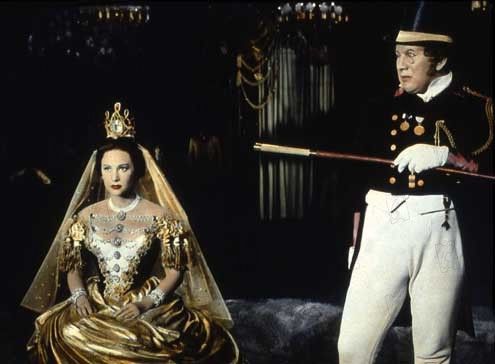
Lola Montès as (im?)pure character is nothing less than fascinating - and yet one never truly sympathises with her plight in the same way that we do with Lisa Berndle and Madame de. Ophüls' stylizations here distance us from Lola Montès, and it's within this distance that the director creates a metaphysical world whereby he weaves a discourse that deconstructs the role of celebrity. The centrality of the circus within this narrative demands us to consider the relationship between performer and audience, and in essence this applies to Lola's own history and her controversial (and supposedly numerous) liaisons. Furthermore, the stage at the film's core emphasises the role of artifice in the film - a concept that Ophüls naturally exploits to its full potential.
As was the case with my viewings of Liebelei, I cannot even begin to imagine how resplendent this film initially seemed - particularly in terms of colour. I must've caught about a tenth of the film's glory when I watched it, which is a shame because the effect of a decent print makes a world of difference and could've bludgeoned my senses into submission simply through its colour palette (much like the restoration of Renoir's The River, for example). The much-discussed fluidity of Ophüls' camera here is a curiosity: whereas in his other films I perceived these movements to be motivated by a romantic desire on the characters' part to escape the restrictions imposed upon them by plot, in Lola Montès I felt none of this? In fact, I felt that the camerawork here often had the converse effect of further entrapping Lola within the decadent confines of her environments. Of course, it would take a second viewing of this film to comment on that more...
Before I get too carried away, allow me to pause and say that Ophüls' complex manoeuvres aren't always successfully reconciled with his story, and it's a discrepancy that isn't necessarily countered by his genius. The structure of the narrative is markedly uneven, most obviously in the lack of consistency re: our returns to the circus. And upon those seemingly random forays onto the stage, the ringmaster's commentary occasionally proves detrimental - as in the moments when he describes Lola's social ascendancy whilst the camera acrobatically follows her climb to a theatrical summit (although it's very uncharacteristic of Ophüls to treat his audience with such disrespect, so perhaps there are others force at work here?) Moreover, the story of Lola Montès itself does little to inspire our enthusiasm - her lifestyle in 1955 must surely have seemed tame, so what to make of it in this day and age?! As a result of this discord, Lola's struggle to love in spite of society's rigidities is rendered lifeless, and lacking in resonance.
However, if the story of Lola Montès - a character whose aforementioned struggle is so Ophülsian it hurts - comes across as uninspiring, then perhaps it's necessary to ask ourselves why this is. He's struck gold with these characters before, so why fail with this one? I notice that Roger Ebert's review takes issue with Martine Carol's performance: "...she comes across as wooden, shallow, not even very attractive." He's accurate, but I think he's also missed the point. Perhaps it's just my love of the guy shining through here, but anyone with a familiarity of his work knows that Ophüls is a terrific director of actresses - Danielle Darrieux, Magda Schneider... hell, this is the guy who even managed to utilize Joan Fontaine's errant brow to his advantage. What I propose is that Carol's prosaicism is intended, and is entirely befitting of the director's thematic concerns. Personally, I don't think it's a performance that's completely banal - there's poignancy in Carol's work - but even so, the fact that she so underwhelms as a character is surely part of Ophüls' commentary about the ludicrous nature of myth-making? Her vacant expressions constantly undermine the narrative's core creation of a sensual seductress - so effectively, she's a mirror and not an originator of the film's frivolous lust. Through Carol's intelligent performance then, the film assumes a feminist dimension that it might otherwise have lacked, forcing the audience to confront the frequent objectification of Lola, and drawing attention to our own expectations of sex and desire.
Lola Montès isn't a flat-out masterpiece, but I'd argue that this is perhaps an essential demonstration of Ophüls' directorial flair? His ability to overcome a somewhat cumbersome screenplay through his bold celebration of artifice is a marvel to behold, and his handling of wider themes is perhaps more astute than ever. The film's exploration of the relationship between performer and audience is something that I find particularly striking considering that this would be his last film, and the surprising finale is perhaps his most well-executed from all that I've seen to date. It's as heartbreaking as his greatest romances, but ultimately a scathing critique of our own needs as an audience. As the final word on the physical and moral decadence that permeates so many of his films then, Lola Montès is a fitting epitaph to an exceptional career.
And LOL, I think I convinced myself of my love for this whilst typing up those thoughts!
Tuesday, 15 January 2008
Liebelei (Ophüls, 1933)
Is Max Ophüls the greatest director of love stories ever? I'm starting to think so...

Those whose knowledge of this shamefully underrated genius is restricted to the American/French classics of his later career need to familiarise themselves with Liebelei - not simply because the film's influence on works such as Letter from an Unknown Woman and (the incomparable) Madame de... is ostensible, but also because it's a heartbreaking masterpiece in its own right. Thematically, this is pure Ophüls to its very core: the doomed love affair, disdain for the rigidity of social conventions, the climactic duel of misguided machismo... all these hallmarks of his oeuvre seem to originate from here. Stylistically, Liebelei predates the birth of his extraordinarily fluid camerawork but one nevertheless gets the sense of a master at work: the film brims with marvellous set-pieces and sequences, linked together by Ophüls' curious preoccupation with doorways and windows - as if to constantly augment the shared desire of both director and character(s) to escape and break free of the restrictions imposed upon them (specifically, upon the camera and upon love itself.)
It's when conveying these aforementioned restrictions that Ophüls' strengths as a director begin to luminesce his audience into submission. Of course, the characters' limitations are often explicitly referred to within the dialogue itself (Mizzi's reference to the unattainability of the "gold-braided" members of the military, for example), but in his acute juxtapositions and startling manipulation of music it's the director's magic that leaves the biggest impression. A particularly striking sequence sees the newly-coupled Christine and Fritz losing themselves to a passionate waltz in an unremarkable café - their surroundings underwhelm, but their love does anything but and it's one of the most enchanting moments in the film. As this scene quietly fades to black, the waltz on the soundtrack continues but morphs into something more grandiose and suddenly we find ourselves in the lavish ballroom of the Baroness - Fritz's former lover who's determined to maintain her hold on him. Now it's the turn of Fritz and the Baroness to waltz yet despite the same tune and a more magnificent setting, the affection is painfully absent. Through this simple parallel then, Ophüls effectively highlights the difference between his two filmic worlds and three of the relationships at their centre (it should be noted that the Baron's intense glare is an integral part of the latter scene's tone.) The concept of an idyll disrupted by the powers-that-be is one that surfaces repeatedly during the film: Christine and Fritz's initial walk home is followed by a confrontation with the Major, whilst the party that Theo and Mizzi arrange is interrupted by the Baron's questioning which subsequently seals Fritz's fate.
To return to the initially-discussed sequence for a moment, Ophül's' use of music as continuity here is typical of the way in which Liebelei takes us to the very roots of melodrama, and certainly the presence of music in the film is felt throughout - not just through Ophüls' impressive utilisations but also through its infiltration of the characters' lives: the opening scene at the opera emphasises its relevance as social ritual whilst Theo is seen to be an accomplished pianist. Most notably, Christine and her father are both musicians themselves and such apt professions in a film that often plays like the cinematic equivalent of a tragic melody does much to underline where the director's allegiances lie.
A distinct lack of music then, characterises the more painful moments within the film (through their association with the aristocracy.) Taking this into account, much of the film's final act is relatively chilling in comparison to what's preceded it: the fate of both the star-crossed lovers, Christine's devastating close-up etc. are all set into motion following Fritz's request that Theo stop playing the piano after the Baron inadvertently gatecrashes their soirée. The ease with which Fritz capitulates to the Baron during this encounter is unusual ("I am at your disposal") but maintains Ophüls' observations re: the power of social mores. What's especially stunning about this commentary is his decision to set the story in 1910 - something marked prominently in the film's introductory shot. Ophüls depicts a society dominated by an emotionally barren aristocracy, and governed by a militaristic regimen of codes and conventions (it's no coincidence that the role of the military is so marked here.) Yet from Liebelei's 1933 release right through to today, the audience is gifted with the benefit of hindsight - we are well aware that just four years later this Ophülsian portrait of society would abruptly collapse into irrelevance, and Fritz's painful submission is made all the more poignant with the knowledge that it was perhaps unnecessary. As if to emphasise this point, Ophüls allows for a clash between Theo and the Colonel that proves that it is possible to defy the system. By this point however it's too late for Fritz, and Theo's assertion that "every shot not fired in self-defence is murder!" subtly points towards the events of 1914 and questions whether or not Fritz could have survived WWI as a lieutenant, even if he had managed to successfully avoid 1910.
Liebelei's final act is tinged with sadness (and the finale itself is crushing) and yet to argue the same for the film as a whole would be disrespectful to Ophüls' vision. Too often, this most marvellous of directors has been unfairly maligned for his concern with subject matter that is considered too 'slight' in the world of film criticism. To this, I argue: how on Earth could one argue that love is a 'slight' subject? If anything, it is the most complex feeling of them all, and Ophüls' repeated success at engaging with the topic makes him perhaps even more essential than most (although his brand of cinematic style should render him thus anyway.) Ophüls is as timeless as his favourite issue, so despite the importance of historical context when discussing Liebelei and its tragedy, it's crucial to remember that the film is above all a brilliant meditation on love. The plethora of different relationships on offer here accentuates this: the lack of love between the Baron and Baroness, the affair between the Baroness and Theo, the frivolous nature of Theo and Mizzi's relationship (which forms the crux of the film's humorous counterpoint to its tragedy), and the intense and beautiful romance shared by Fritz and Christine. Although this final pairing makes us emotional wrecks, it's the love and not the sorrow that resonates the most. Liebelei strikes a chord because it's vision of love is nigh-on unrivalled within cinema. For a film made nearly ¾ of a century ago, it stands as a testament to Ophüls everlasting genius that the sleigh ride in the snow is possibly the most effortlessly romantic sequence that I've ever come across. When the film concludes in a similarly snowy field, with the distant voiceovers of Fritz and Christine whispering "I'll love you forever"... well, my eyes are welling up just thinking about it.
Those whose knowledge of this shamefully underrated genius is restricted to the American/French classics of his later career need to familiarise themselves with Liebelei - not simply because the film's influence on works such as Letter from an Unknown Woman and (the incomparable) Madame de... is ostensible, but also because it's a heartbreaking masterpiece in its own right. Thematically, this is pure Ophüls to its very core: the doomed love affair, disdain for the rigidity of social conventions, the climactic duel of misguided machismo... all these hallmarks of his oeuvre seem to originate from here. Stylistically, Liebelei predates the birth of his extraordinarily fluid camerawork but one nevertheless gets the sense of a master at work: the film brims with marvellous set-pieces and sequences, linked together by Ophüls' curious preoccupation with doorways and windows - as if to constantly augment the shared desire of both director and character(s) to escape and break free of the restrictions imposed upon them (specifically, upon the camera and upon love itself.)
It's when conveying these aforementioned restrictions that Ophüls' strengths as a director begin to luminesce his audience into submission. Of course, the characters' limitations are often explicitly referred to within the dialogue itself (Mizzi's reference to the unattainability of the "gold-braided" members of the military, for example), but in his acute juxtapositions and startling manipulation of music it's the director's magic that leaves the biggest impression. A particularly striking sequence sees the newly-coupled Christine and Fritz losing themselves to a passionate waltz in an unremarkable café - their surroundings underwhelm, but their love does anything but and it's one of the most enchanting moments in the film. As this scene quietly fades to black, the waltz on the soundtrack continues but morphs into something more grandiose and suddenly we find ourselves in the lavish ballroom of the Baroness - Fritz's former lover who's determined to maintain her hold on him. Now it's the turn of Fritz and the Baroness to waltz yet despite the same tune and a more magnificent setting, the affection is painfully absent. Through this simple parallel then, Ophüls effectively highlights the difference between his two filmic worlds and three of the relationships at their centre (it should be noted that the Baron's intense glare is an integral part of the latter scene's tone.) The concept of an idyll disrupted by the powers-that-be is one that surfaces repeatedly during the film: Christine and Fritz's initial walk home is followed by a confrontation with the Major, whilst the party that Theo and Mizzi arrange is interrupted by the Baron's questioning which subsequently seals Fritz's fate.
To return to the initially-discussed sequence for a moment, Ophül's' use of music as continuity here is typical of the way in which Liebelei takes us to the very roots of melodrama, and certainly the presence of music in the film is felt throughout - not just through Ophüls' impressive utilisations but also through its infiltration of the characters' lives: the opening scene at the opera emphasises its relevance as social ritual whilst Theo is seen to be an accomplished pianist. Most notably, Christine and her father are both musicians themselves and such apt professions in a film that often plays like the cinematic equivalent of a tragic melody does much to underline where the director's allegiances lie.
A distinct lack of music then, characterises the more painful moments within the film (through their association with the aristocracy.) Taking this into account, much of the film's final act is relatively chilling in comparison to what's preceded it: the fate of both the star-crossed lovers, Christine's devastating close-up etc. are all set into motion following Fritz's request that Theo stop playing the piano after the Baron inadvertently gatecrashes their soirée. The ease with which Fritz capitulates to the Baron during this encounter is unusual ("I am at your disposal") but maintains Ophüls' observations re: the power of social mores. What's especially stunning about this commentary is his decision to set the story in 1910 - something marked prominently in the film's introductory shot. Ophüls depicts a society dominated by an emotionally barren aristocracy, and governed by a militaristic regimen of codes and conventions (it's no coincidence that the role of the military is so marked here.) Yet from Liebelei's 1933 release right through to today, the audience is gifted with the benefit of hindsight - we are well aware that just four years later this Ophülsian portrait of society would abruptly collapse into irrelevance, and Fritz's painful submission is made all the more poignant with the knowledge that it was perhaps unnecessary. As if to emphasise this point, Ophüls allows for a clash between Theo and the Colonel that proves that it is possible to defy the system. By this point however it's too late for Fritz, and Theo's assertion that "every shot not fired in self-defence is murder!" subtly points towards the events of 1914 and questions whether or not Fritz could have survived WWI as a lieutenant, even if he had managed to successfully avoid 1910.
Liebelei's final act is tinged with sadness (and the finale itself is crushing) and yet to argue the same for the film as a whole would be disrespectful to Ophüls' vision. Too often, this most marvellous of directors has been unfairly maligned for his concern with subject matter that is considered too 'slight' in the world of film criticism. To this, I argue: how on Earth could one argue that love is a 'slight' subject? If anything, it is the most complex feeling of them all, and Ophüls' repeated success at engaging with the topic makes him perhaps even more essential than most (although his brand of cinematic style should render him thus anyway.) Ophüls is as timeless as his favourite issue, so despite the importance of historical context when discussing Liebelei and its tragedy, it's crucial to remember that the film is above all a brilliant meditation on love. The plethora of different relationships on offer here accentuates this: the lack of love between the Baron and Baroness, the affair between the Baroness and Theo, the frivolous nature of Theo and Mizzi's relationship (which forms the crux of the film's humorous counterpoint to its tragedy), and the intense and beautiful romance shared by Fritz and Christine. Although this final pairing makes us emotional wrecks, it's the love and not the sorrow that resonates the most. Liebelei strikes a chord because it's vision of love is nigh-on unrivalled within cinema. For a film made nearly ¾ of a century ago, it stands as a testament to Ophüls everlasting genius that the sleigh ride in the snow is possibly the most effortlessly romantic sequence that I've ever come across. When the film concludes in a similarly snowy field, with the distant voiceovers of Fritz and Christine whispering "I'll love you forever"... well, my eyes are welling up just thinking about it.
Sunday, 23 December 2007
McCabe & Mrs. Miller (Altman, 1971)
The film marks itself out as an anomaly from the moment the credits start floating across the screen (unique in itself.) What's Leonard Cohen doing in this landscape, for example? A few minutes later, one starts to question Altman's insufferably brilliant use of overlapping dialogue, especially when the mumbling from the supposed 'star' of the film (Warren Beatty) is drowned out as a result. Naturally, the director is several steps ahead of us all, and these early decisions are all part of his thoroughly unique evocation of the West: Cohen underpins the film's impalpable atmosphere and thus forms a notable counterpoint to the realism inherent within the use of dialogue. As for Beatty, is it not utterly appropriate that a film so concerned with overturning the hallmarks of the genre would strip him of his star status (externally) and heroism (internally)? Take note also, of his co-star's non-entrance: Altman gives us a brief glimpse of an opium-smoking mess of a woman whilst McCabe is haggling over the price of prostitutes - and that 'mess' turns out to be Julie Christie of all people.
Considering their high-profile relationship off-screen, it's remarkable that Altman (and the actors) manage to so successfully convey the tentative nature of the McCabe and Mrs. Miller partnership. The attraction and tenderness shared between the two is more than evident, but they're denied the opportunity to let it fully materialise because of their unforgiving surroundings which insist that they think of themselves first and foremost. Their self-denied love infuses the film with a melancholy undercurrent of romanticism, but imo it's when examining them as individual types that they truly become alive as characters. Altman is concerned with deconstruction of course, but I think there's also a contemporary relevance to his work? Despite her trashy façade, Mrs. Miller is perhaps the most astute character in the film and in possession of far greater business acumen than her 'partner.' She and her 'girls' highlight Altman's refreshing focus on the significance of women in the West: their traditionally perceived role as noble homemakers is thus transposed into the realm of prostitution where Mrs. Miller is - again - a homemaker, simply cut from a different end of the cloth. Thus, Altman undermines our preconceptions re: their profession, which is used here for the women to empower themselves and to carve out a safe refuge in their daunting environment (compare their sense of community to the snide world in which the men reside.) Mrs. Miller couldn't have existed in, say, the 1940s but link her to the onslaught of second-wave feminism and her presence becomes almost a necessity.
Similarly, the role of McCabe is surely not unrelated to the ruminations on the role of masculinity that occur in those other 'classics' of 1970s American cinema? In relation to the Western, he's so far removed from John Wayne it verges on the humorous. After a short time spent on establishing the myth of John McCabe during the film's opening ("he shot Roundtree?!"), Altman devotes pretty much the entirety of the remainder to obliterating that legend altogether. He can't add up, he's submissive to his female business partner, he has a heart ("I got poetry in me!"), he spends much of the film drunk and he's a coward to boot - and this is exactly why he's so appealing as a character. The very idea of heroism strikes me as far-fetched when the main objective is plain survival as it is here. McCabe's actions, whilst not something we're accustomed to within the genre, are nonetheless completely identifiable and therefore essential for the director's realistic designs.
This is not to say, however, that Altman is entirely non-conformist when it comes to toying with genre. As soon as McCabe starts deviating from his prescribed role as hero, one gets the sense that there's a single way for his journey to end: death. This is brilliantly foreshadowed within the film itself through the character of the Cowboy: Altman records his entrance in a long-shot which perpetuates a 'foreboding lone ranger' hero-type, but then cuts to reveal a completely amicable young man looking for the famed brothel. His departure from the film is perhaps it's shocking and most heartbreaking moment: a manipulated murder at the hands of one of the hitmen out for McCabe (who himself is initially seen as a hero only to then undo himself through his good-natured greed.) The resounding idea here is one of destiny, and a fate that's beyond one's own grasp - and this in itself is a brilliant subversion of the concept of Manifest Destiny. Altman shows us how expansion was neither obvious nor certain, but instead brutal and potentially fatal. The only 'obvious' and 'certain' aspect of this film is death.
A severe lack of innocence permeates this cinematic world. McCabe's attempts to survive during the finale then, are all the most devastating as a result. It's the bravura moment in Vilmos Zsigmond's gorgeous lensing, and a superbly edited sequence that induces tension in spite of the inevitable outcome. With all his other options exhausted, the 'innocent' McCabe is finally coerced into actualizing his myth. The brilliant battle in the snow sees the town church go up in flames, and McCabe manages to gun down all three of his hitmen but he's nonetheless unable to escape his own destiny. On top of all this, Altman denies him even these final moments of 'heroism' as he tellingly cuts away to images of the oblivious townspeople concerned only with the saviour of their dilapidated church. A concluding shot of Mrs. Miller, lost in a haze of opium as if to avoid the pain of it all, is the devastating masterstroke - with this, the entire trauma of the Western experience weighs down upon the audience and Altman's dual engagement with past and present finally achieves transcendence.
Subscribe to:
Posts (Atom)